

She whispered my name. And suddenly, the entire office seemed to run out of air. The receptionist hung up slowly, as if she had received an order she was afraid to repeat. She looked me up and down: the sale-rack blouse, the bleeding knee, the stained sneakers, the puffy eyes from lack of sleep.


“Mr. Collins will see you,” she said. “Right this way, miss.” Miss. At the Vanderbilt Group tower, they had thrown me out like garbage. Here, with my leg busted open and my heart in pieces, someone was calling me miss.
I followed the receptionist down a hallway filled with incredibly expensive paintings. Everything smelled of wood, freshly ground coffee, and air conditioning. At the end, there was a black door with gold lettering. “Robert Collins.”

Before I could knock, the door opened on its own. A man in his sixties appeared in front of me. Dark suit. White hair. Tired eyes. He didn’t seem surprised to see me. He looked like he had been waiting for me for years.
“Sophia,” he said, and my name in his mouth sounded like an ancient promise. “Your mom was right. You were going to come when you were ready.”
I couldn’t hold it in. “My mom is dead.”
The lawyer closed his eyes for a second. It wasn’t a gesture of politeness. It hurt him. “I know. Thomas let me know.”

The name of my adoptive dad coming from his mouth made me clench my fists. “Did you know everything too?” “I knew enough.” “Well, I didn’t. So start.”
He let me in. He didn’t offer me water. He didn’t tell me to calm down. He didn’t try to sit me down like a scolded child. He just pointed to an armchair and then pulled a metal box out of a drawer.
On top, it had a label in my mom’s handwriting. “For when Sophia asks.”
I felt my legs give out. “She left this four years ago,” Robert said. “She asked me not to look for you. That you would come on your own when the truth could no longer be hidden.” “What truth?”
Robert opened the box. There were folders. A USB drive. Certificates. Contracts. Photos. Bank statements. And a letter folded in three.
I recognized my mom’s handwriting before I even touched it. “Soph.” Nothing more.
My hands shook. “Read it later,” Robert said. “First you need to understand something.” “No. I’m reading it now.”
I took the letter. I opened it.
“Sweetheart:
If you are reading this, forgive me for not telling you sooner who your blood father was. It wasn’t out of shame. I was never ashamed to have you. I was afraid they would take you away from me.
Matthew Vanderbilt didn’t abandon me because he didn’t love you. He abandoned me because he was a coward.
But Rebecca Sterling didn’t destroy me just out of jealousy. She destroyed me because she knew something Matthew wouldn’t find out until many years later: you weren’t a mistake. You were the only legitimate daughter who could take everything away from her son.”
I froze. I looked up. “What does ‘legitimate’ mean?”
Robert took a deep breath. “It means Matthew Vanderbilt and Rebecca Sterling signed a prenup keeping their assets separate, but they were never able to have biological children. Leonard is not Matthew’s son.”
I felt the room spin. “What?” “Leonard was registered as his, but he isn’t. Matthew found out when the boy was ten. Rebecca had forged medical records, dates, documents. By then, a scandal would have destroyed the company, the family, and the public image they protected so fiercely.”
I gripped the armrest of the chair. “And me?”
Robert opened another folder and slid a document toward me. It was a DNA test. Matthew Vanderbilt: probability of paternity 99.9998%. My name. Sophia Miller. My date of birth. My life reduced to numbers.
“Your mom had it done when you were two years old,” he said. “Matthew paid for it in secret.” “So he did know.” “Yes.” “And he still left us living under a leaky roof.”
Robert didn’t answer right away. That silence infuriated me more than any excuse.
“Three hundred thousand dollars a month doesn’t buy a childhood!” I yelled. “My mom died rationing her pills! I worked double shifts while that man was in magazines hugging someone else’s son!”
Robert looked down. “Your mom didn’t touch that money because she didn’t want Matthew to buy her forgiveness.” “Then where are the missing fifty million?”
The lawyer stood up, walked over to a safe embedded in the wall, and typed in a code. He pulled out a red folder. He placed it in front of me. “In this.”
I opened it. I didn’t understand at first. They were investment contracts. Debt assignments. Equity purchases. Trusts. Names of companies I had seen in my mom’s clippings.
Then I saw my name. Not the full name. Initials. S.M. Ultimate beneficiary.
“Your mom didn’t save the money,” Robert said. “She turned it into a key.” “A key for what?” Robert stared right at me. “To enter Vanderbilt Group through the door they slammed in her face.”
I couldn’t speak. He continued.
“For eighteen years, your mom used part of Matthew’s deposits to buy debt from the group’s subsidiaries when they were in crisis. She did it through third parties. Small portions. Without drawing attention. No one imagined that a seamstress from the Bronx was gathering papers that could one day bring a multi-billion dollar development firm to its knees.”
I remembered her patched jackets. Her worn-out shoes. The way she turned off lightbulbs to save electricity. And it made me want to cry, not out of sadness, but out of rage. My mom had lived like a pauper to buy the downfall of the rich.
“Why didn’t she tell me?” “Because she was afraid you would go looking for them before it was time. Because she knew they would humiliate you. And because she needed one more thing.” “What thing?”
Robert pulled out the USB drive. “Matthew’s confession.”
He handed it to me. It was small, black, insignificant. It weighed less than a coin. But it felt like it had dynamite inside. “Confession?” “Six months ago, Matthew came to this office. He’s sick, Sophia. Very sick. I don’t know how long he has left. He wanted to legally acknowledge you. He wanted to change his will.”
I stopped breathing. “And did he?” Robert clenched his jaw. “He didn’t get the chance.” “Why?” “Because Rebecca found out.”
The name of that woman fell between us like poison. “What did she do?” “The same thing she always does. She locked the problem away. For the past five months, no one who doesn’t go through her can see Matthew. They changed doctors, drivers, nurses, phones. They even blocked my calls.” “Do they have him kidnapped?” “Legally, I can’t say that without proof.” “But you’re saying it with your face.”
Robert didn’t smile. “Yes.”
I stood up. My knee burned, but I didn’t even feel it. “Then let’s get him out.” “It’s not that simple.” “Nothing in my life has been simple.”
Robert walked over to the window. From there you could see the Vanderbilt Group tower, shiny, arrogant, as if the world owed it permission to exist.
“You shouldn’t have gone there today,” he said. “I didn’t know.” “They do now.”
I turned around. “What do you mean?” “When you gave your name at reception, you triggered something. Rebecca had been waiting years for you to show up.”
A chill ran down my spine. “Waiting?”
Robert opened another folder and pulled out a photo. It was me. But not a social media photo. Me leaving work, in my tea shop uniform. Me getting on the bus. Me going into the hospital with my mom. Me buying groceries.
I felt nauseous. “They were following me?” “For the last two years.” “Did my mom know?” “Yes.”
The rage rose up so fast it almost choked me. “Everyone knew except me!” “Your mom was trying to protect you.” “My mom let me walk straight into the lion’s den with a business card!” “No,” Robert said, raising his voice for the first time. “Your mom let you come after she died because, alive, she wouldn’t have been able to bear seeing you hate her.”
That broke me. I sat down again. I didn’t cry pretty. I cried the way you cry when you start to understand that love can also cause pain, even when it comes with good intentions.
Robert handed me a tissue. “Sophia, your mom wasn’t ignorant. She wasn’t weak. She wasn’t waiting for justice. She was building it.” “And what am I in all this?” “The heir.”
I laughed. An ugly, wet laugh. “I’m not the heir to anything. I can’t wear heels without falling over. I don’t know how to talk like them. Today a guard threw me out on the street and Leonard Vanderbilt threw bills at me like I was a dog.”
Robert looked at me with a calmness that made me angry. “That’s why you’re going to learn fast.”
At that moment, his office phone rang. The receptionist spoke through the intercom, her voice trembling. “Mr. Collins… Mrs. Rebecca Sterling is here.”
My entire body went stiff. Robert didn’t move. “Is she alone?” “No. She’s with Mr. Leonard Vanderbilt… and security.”
I looked at the metal box. The USB. The documents. My name written on papers that could destroy a dynasty. Robert put everything away quickly, but without panicking.
“Listen to me carefully,” he said. “Whatever happens, don’t sign anything, don’t accept anything, don’t deny anything. Just watch. Sometimes watching without fear is the first way to win.”
The door opened without anyone asking for permission. Rebecca Sterling walked in as if the office belonged to her.
She was shorter than I imagined, but she filled the room. White suit, real pearl necklace, red lips, glass eyes. Behind her came Leonard, impeccable, with the same look of disgust he had when he saw me on the ground.
When he recognized me, he smiled. “Look at this,” he said. “The girl from the lobby actually found someone to play along with her story.”
I didn’t answer. Rebecca didn’t look at him. She just locked her eyes on me. And then I understood why my mom had kept quiet for so many years. That woman didn’t look angry. She looked accustomed to winning.
“Sophia Miller,” she said, tasting my name as if it were something dirty. “Your mother always had terrible taste in choosing her timing.”
I stood up. “Don’t talk about my mom.”
Leonard let out a laugh. “Or what?”
I looked at him. “Or you’re going to bend down and pick up the bills you threw at me.”
His smile vanished. Robert stepped between us. “Mrs. Sterling, this is my office. I suggest you watch your tone.”
Rebecca dropped a folder on the desk. “I’m here to prevent a disaster. Inside is a non-disclosure agreement and a rather generous financial offer. The little girl signs it, disappears, and we all go on with our lives.”
“I’m not a little girl,” I said.
Rebecca looked at my bleeding knee. “No. You’re worse. You’re a poor adult with information she doesn’t understand.”
I felt the blow, but I didn’t back down. “Explain it to me then.”
For the first time, something flickered on her face. She wasn’t expecting that. Neither was I. But my mom had left a phrase embedded in my skin: don’t beg, don’t get on your knees.
Rebecca smiled slowly. “Your mother was a fling. An old embarrassment. A mistake that Matthew paid more than enough for.” “Three hundred thousand a month to shut her up?” “To keep you both away.”
Robert raised a hand. “Careful, Rebecca.”
She ignored him. “Your mom could have lived well. She could have bought a house, a car, decent clothes. But she preferred to play the martyr. That’s not my fault.”
I took a step toward her. “No. Your fault was dragging her through a factory while she was pregnant.”……
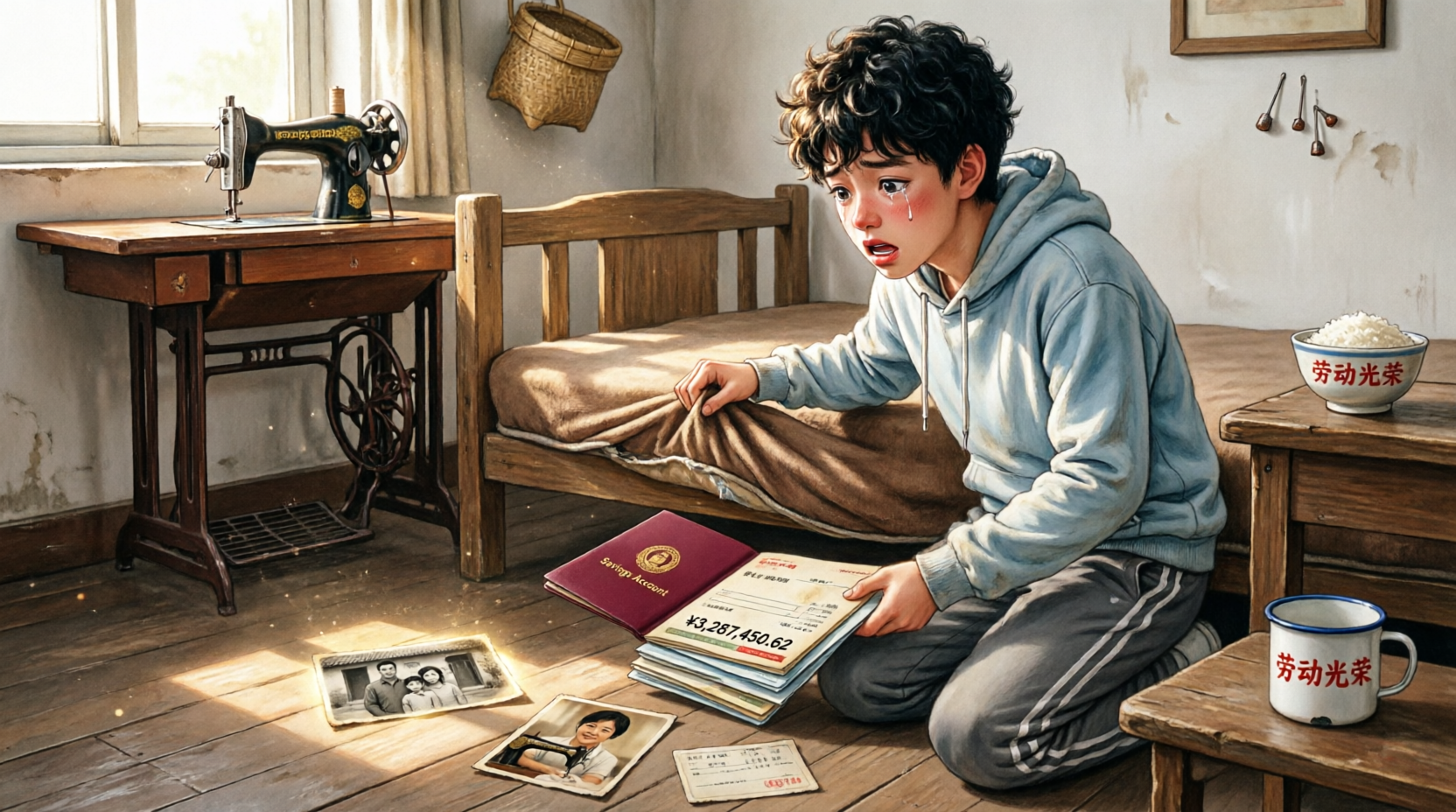
PART 2-The Night My Mother Died, I Found a Hidden Savings Book With $14.6 Million Inside—Then I Discovered Someone Had Been Sending Her $300,000 Every Month for 18 Years, and My World Collapsed the Moment My Father Showed Me an Old Photograph With My Face… and Another Man’s Last Name.
Leonard turned to look at her. “What?” Rebecca’s expression didn’t change, but her jaw tensed. How funny. The prince didn’t know the whole story. “Your mom hid things from you too,” I told Leonard. “Seems it’s a family tradition.” “Shut up.” “Did she tell you Matthew wanted to acknowledge me?” Leonard went completely still. Rebecca was faster. “Lies.”


Robert opened a drawer, pulled out a simple copy, and placed it on the table. “Draft of acknowledgment. Dated six months ago. Matthew’s preliminary signature.”Leonard took the paper. He read it. His face went from mockery to fear. “Mom…” “That holds no validity,” Rebecca said. “Not yet,” Robert answered. “But it serves to ask questions. And there are very curious judges out there when a sick man changes doctors right after trying to acknowledge a daughter.” Rebecca looked at me then as if she were finally seeing me. Not as a poor girl. Not as a mistake. As a threat.
“You don’t know who you’re messing with.” “Yes I do,” I said. “With the woman who was terrified of a seamstress for eighteen years.” The slap came fast. I didn’t see it coming. My face, my ear, my pride all burned. Leonard took a step back, surprised. Robert shouted her name. The guards shifted. But I didn’t fall. I brought my hand to my cheek and looked at her. Then I smiled. Because up in the corner of the office, there was a camera. Rebecca saw it too. Too late. Robert spoke with deadly calm. “Thank you. That makes things much easier.” Rebecca’s face cracked for just a second. Then she regained control, picked up her folder, and walked toward the door.

“You have forty-eight hours to accept the offer,” she told me. “After that, you’re going to find out that blood is useless when you don’t have the last name.”
Before leaving, she leaned in toward me. “And tell Thomas I still remember him.”

The door closed. I went cold. “Thomas?” I whispered.
Robert didn’t look at me. And that was my first warning.
“Why did she say that?” The lawyer stayed silent. “Robert.”
He took a deep breath, like someone who knows he’s about to break another life. “Because Thomas didn’t just marry your mom to protect her.”
I felt all my exhaustion vanish at once. “What are you saying?”
Robert opened the metal box again and pulled out an old photo. My mom, young. Thomas, young. Matthew behind them. And Rebecca in the center, with a hand resting on Thomas’s shoulder. Too close. Too familiar.
On the back of the photo, a date was written. One year before I was born. Robert handed it to me.
“Before working for Matthew, Thomas worked for Rebecca.”
My cell phone buzzed right at that moment. It was a text from Thomas. “Sophia, don’t come back home. There are things your mom didn’t let me tell you.”
Below it came a photo. The front door of our house was open. And in the living room, sitting like a queen among my mom’s old furniture, was Rebecca Sterling.
EDUCATIONAL MEANING & LESSONS LEARNED :OF The Night My Mother Died, I Found a Hidden Savings Book With $14.6 Million Inside—Then I Discovered Someone Had Been Sending Her $300,000 Every Month for 18 Years, and My World Collapsed the Moment My Father Showed Me an Old Photograph With My Face… and Another Man’s Last Name.
EDUCATIONAL MEANING & LESSONS LEARNED
1. The Myth of Legitimacy vs. The Reality of Documentation
2. Coercive Control & Emotional Gaslighting in Family Systems
3. The Architecture of Secrets & Intergenerational Trauma
4. Legal Strategy as Empowerment, Not Retaliation
5. Class, Labor, & The Invisibility of Care Work
6. Agency, Boundary-Setting, & The Courage to Reclaim Narrative
7. Actionable Takeaways for Readers & Society
- For Individuals: Preserve important documents. Seek independent legal counsel early. Record interactions when safety or truth is at risk. Do not equate silence with peace.
- For Families: Normalize open communication about money, health, and legacy. Respect boundaries as acts of love, not rejection. Acknowledge care work visibly and financially.
- For Legal/Healthcare Systems: Implement standardized capacity assessments for end-of-life decisions. Protect vulnerable patients from familial coercion. Train professionals to recognize coercive control patterns.
- For Society: Decouple worth from lineage. Elevate marginalized voices in historical and financial narratives. Fund legal aid for those navigating family/estate disputes without resources.
- For Survivors of Coercive Control: Document everything. Build a support network before crisis hits. Understand that forgiveness is optional; safety is not. Your truth does not require permission to be valid.
CHARACTER ANALYSIS
1. Sophia (The Narrator / The Awakened Heir)
2. Rebecca Sterling (The Matriarch / The Architect of Control)
3. Robert (The Lawyer / The Strategic Ally)
4. Thomas (The Guardian / The Silent Defector)
5. Leonard Sterling (The Heir / The Unwitting Beneficiary)
6. Matthew Sterling (The Dying Patriarch / The Late Reckoner)
7. Sophia’s Mother (The Seamstress / The Silent Archivist)
I hid from my husband that I had just won 97 million dollars. That night, I lied to his face and told him I had been fired from my job. I thought it was the …..
And I pulled out the black folder from the bank. I didn’t put it on the table right away. First, I looked at Daniel. He was still pale, his fingers stiff around his napkin. His sister looked at him as if a refusal were a blood betrayal. My mother-in-law had tears in her eyes, but not from the fear of losing someone else’s house, but from the fear that her daughter would have to stop showing off a life she could never afford.


“Maya,” Daniel said very slowly, “what is that?” I opened the folder. I didn’t put the full bank statement inside. I wasn’t stupid. It only contained copies, hidden transactions, and a report the bank manager had helped me review with a tax attorney after I claimed the prize. I had gone to the state lottery headquarters downtown with my ID, my winning ticket, and cold hands; they had repeated to me that prizes are paid out in US dollars, subject to the corresponding tax withholdings, and within the established timeframe. I nodded as if I were listening to something completely normal, as if my life hadn’t just been split in two.

But at that table in Century City, no one knew that. To them, I was still Maya, the unemployed wife. The freeloader. The one who should keep her mouth shut. I slid the first page toward Daniel. “Don’t sign anything.” Richard let out a nervous laugh. “Oh, please. Does the unemployed wife offer financial advice now?” “Yes,” I said. “And it wasn’t free.” Chelsea leaned in to look, but I covered the page with my hand. “This is for my husband.”
Daniel read it. I watched his expression change from confusion to horror.

“Richard… you owe three point eight million dollars?”
A heavy silence fell over us. My mother-in-law put a hand to her chest. Chelsea opened her mouth, but no sound came out.
Richard tried to snatch the paper from him. “That’s private.”
Daniel held it up out of his reach. “Private? You’re asking me to put my house up as collateral.”
“Our family is in a crisis,” Chelsea said, regaining her venom. “That doesn’t give you the right to humiliate us.”
“You brought me here to use me,” Daniel replied.
I had never heard him speak to her like that. Not with shouting. Not with drama. With pain.
And that pain was worth more than all the millions hidden in my account.
Richard pointed at the folder. “Where did you get that?”

I looked at him without blinking. “From the same place you get the truth when someone leaves too many unpaid bills.”
Chelsea laughed, but she didn’t sound confident anymore. “Maya, you don’t know anything about business.”
“I know how to add.” I pulled out another page. “I also know that your salons in Brentwood and Sherman Oaks are behind on rent. That you sold annual memberships with impossible discounts. That you owe hair dye suppliers, furniture vendors, payroll, and even a woman who rented you laser hair removal machines.”
Richard stood up. “That’s enough.”
Daniel stood up too. “If you come near my wife, I’ll break your face.”
The whole restaurant turned to look. The waiter, holding a tray with sparkling water, froze near our table. Beyond the large windows, the lights of Century City looked cold, as if that area of corporate high-rises and massive avenues had been built so that no one could hear anyone else.
Chelsea lowered her voice. “Dani, please. Don’t do this.”
“Do what?” “Leave us stranded.”
Daniel looked at her as if he were finally seeing her without makeup. “You left me stranded every time you insulted Maya and expected me to laugh.”
My mother-in-law started to cry. “Son, your sister is impulsive, but she loves you.”
“No, Mom. Chelsea needs me when it’s convenient for her. And you call that love so you don’t have to feel guilty.”
That sentence made everyone tremble. Me too. Because I had set up that night to test him, but I hadn’t expected to see him break like that.
I slowly put the folder away.
Richard, desperate, changed his strategy. “Maya, you understand. If we don’t sign tomorrow, we lose everything. I know you and Daniel have some savings. I’m not asking for a handout, I’m asking for an investment.”
“No.” “You don’t even know the proposal.” “Yes, I do. You want money to cover a debt, not to grow.”
Chelsea slammed her palm on the table. “You don’t have the right to decide! You don’t even work.”
I breathed. Once. Twice. Three times.
Daniel took my hand. “Chelsea, if you call her a freeloader again, we’re leaving.”
She looked at me as if she wanted to rip my skin off. “And what exactly are you?”
Daniel let go of my hand. He picked up Richard’s papers. He tore them in half. Then into quarters. Then he dropped them onto his untouched plate of steak.
“My wife,” he said. “And she is untouchable.”
I lost my breath. This was the moment. I could have opened the full folder. I could have placed the bank statement in front of them with so many zeros that the restaurant would have stopped breathing. I could have watched Chelsea swallow every insult along with her expensive wine.
But I didn’t. Because that night I understood something money can’t buy: an answer before knowing the prize.
Daniel had already chosen. Without knowing. Without calculating. Without me promising him anything in return.
I stood up. “We’re leaving.”
Chelsea stepped in front of us. “Don’t you dare, Daniel. If you walk out that door, don’t ever call me family again.”
He looked at her with an old sadness. “You never treated me like family anyway.”
We walked out without paying the bill. Richard yelled something about suing us. My mother-in-law cried harder. Chelsea called me a leech before the door closed.
Daniel didn’t look back.
In the parking lot, the Century City air smelled of rain and gasoline. Daniel walked up to the old Honda and stood by the door, as if he didn’t know what to do with his hands. “I’m sorry,” he said. “For what?” “For not doing that sooner.”
That did break me. I hugged him next to the car, between massive SUVs, valet attendants, and people walking out of the restaurant with designer bags. Daniel hid his face in my neck. “I’m not going to put our house at risk,” he whispered. “Not for Chelsea, not for my mom, not for anyone.” “Even if I don’t have a job?”
He pulled back slightly. “Especially then.”
I cried silently. Again. But this time, not out of fear.
I didn’t tell him about the money that night. Not yet.
When we got to the apartment, Daniel pulled out a notebook and started doing the math. Mortgage. Groceries. Electricity. Water. Internet. My health insurance. His $3,500 salary turned into a small wall against a massive world.
“We can sell the car,” he said. “No.” “I can pick up extra shifts.” “No.” “Maya, I don’t want you to feel like you’re alone.”
I sat across from him. “I don’t feel alone.” “Then tell me what we’re going to do.”
I looked at him. He had tired eyes, a wrinkled shirt, and hands stained with the sauce from the soup he had made days ago. He wasn’t rich. He wasn’t powerful. He didn’t know how to invest millions.
But he had torn up the papers that would have destroyed our home.
I took out my phone. The other one. The one with the new SIM card.
Daniel frowned. “What’s that?” “The truth.”
I opened the banking app. My finger trembled before unlocking it. I placed the phone in front of him.
It took Daniel a few seconds to understand. Then he looked up. “Maya… this is wrong.” “No.” “There’s a mistake.” “No.”
He looked again. The screen illuminated his face. Seventy-eight million, minus some investment transfers and separate accounts. It wasn’t all there, but it was enough to make any lie stop breathing.
Daniel stood up so fast the chair screeched. “What did you do?” “I won the Powerball.”
He didn’t say anything.
“I bought a ticket at Mrs. Lupita’s corner store. I cashed it in. I paid the taxes. A lawyer reviewed everything. The bank already knows. The IRS will know what they need to know.”
The State Lottery commission advises that they withhold the corresponding taxes according to federal law, and that prizes have specific claiming rules and deadlines; that’s why I didn’t act alone or in a rush, even though inside I wanted to run screaming.
Daniel remained completely still. “Since when?” “Since before I told you I got fired.”
His face changed. There it was. The wound.
“You lied to me.” “Yes.” “To test me?”
I couldn’t answer quickly. Because saying yes sounded cruel. But saying no would be another lie.
“I was scared,” I admitted. “Of your family. Of Chelsea. Of Richard. That they would find out and eat us alive before we even had a chance to breathe.”
Daniel ran his hands over his face. “And of me?”
That question hurt more than Chelsea’s insult. “Yes.”
He sat down slowly. “I hugged you when I thought we had nothing.” “I know.” “And you already had everything.” “No, Daniel. I had money. I didn’t know if I had a marriage.”
He closed his eyes. The kitchen filled with silence.
Outside, a garbage truck passed by. Someone was blasting music from a passing car. A neighbor dragged a chair. The city carried on with its humble noise, as if seventy-eight million couldn’t possibly fit inside our cream-colored walls.
Daniel stood up without saying a word and went to the balcony. I followed him, but I didn’t get too close.
Below, the avenue shone from the rain. The taco stands were still open. A man with an umbrella was buying street corn. Everything was exactly the same, yet it was a whole different world.
“I don’t want your money,” Daniel said. “It’s ours.” “No. First, tell me if I’m still your husband or if I was just a test.”
I froze. He was right. I had used poverty as a trap. His. Mine. Ours.
“You are my husband,” I said. “But I needed to know if you were going to put me before them when there was absolutely nothing to gain.”
Daniel turned around. “So what now? Are we going to live hiding from your bank account and my family?” “No.” “Then what?”
I took a breath. “Tomorrow we go to a wealth management attorney. Then a CPA. We’re going to set up wills, a trust, liability protection, make everything legal. We pay off the mortgage. We set aside a health fund. We help whoever we want, whenever we want, without anyone threatening us.”
Daniel looked at me with a mix of love and sadness. “You speak as if you’ve already planned out a whole life without asking me.” “I planned a defense. I want to plan our life with you.”
For the first time, his face softened. He didn’t smile. But he stopped looking like a man exiled from his own home.
“We’re not telling Chelsea.” “No.” “Or my mom.” “No.” “Richard is going to have to find the money somewhere else.” “Let him find it.”
Daniel let out a small, tired laugh. “I swear I don’t understand how seventy-eight million fits inside that phone.” “Neither do I.”
We stayed on the balcony until the cold forced us inside. That night, we slept holding hands.
It wasn’t a perfect ending. Perfect endings are a lie.
The next morning, Chelsea showed up at the apartment. She didn’t knock like a guest. She pounded like she owned the place.
Daniel opened the door before I could stop him. She walked in wearing dark sunglasses, even though there was no sun in the hallway. My mother-in-law was right behind her, looking pale, carrying a box of donuts as if the sugar could cover up the shame.
“We need to talk,” Chelsea said. “No,” Daniel replied.
She took off her sunglasses. Her eyes were puffy. “Richard left.”
My mother-in-law started crying. “He took the car, some jewelry, and he isn’t answering his phone.”
Chelsea looked at me. Not with humility. With desperate rage.
“You knew.” “Yes.” “And you didn’t say anything?” “I said it yesterday.” “Not loud enough.”
Daniel closed the door behind them. “What do you want, Chelsea?”
She swallowed hard. “Money.”
My mother-in-law clutched the box of donuts. “Son, even if it’s just for lawyers. Your sister could lose her apartment.”
Daniel looked down for a second. I saw the battle on his face. Their childhood. Guilt. His mother. His sister.
Then he looked at me. Not asking for permission. Looking for solid ground.
I gave a tiny nod. He understood.
“I can help you find free or low-cost legal aid,” he said. “I can go with you to review documents. I can watch my nephew if you need to run errands.”
Chelsea frowned. “And money?” “No.” “Nothing?” “Nothing to cover Richard’s debts.” “You are a miserable piece of work.”
Daniel took a deep breath. “Maybe. But I’m a miserable piece of work who gets to keep his house.”
My mother-in-law gasped. “Daniel!” “No, Mom. It’s over. You will never call Maya a freeloader again. You will never ask me to co-sign anything again. And if you want to keep coming into this house, you are going to respect it.”
Chelsea turned to me. “I’m sure this was your idea.”
Before Daniel could speak, I took a step forward. “Yes.”
She blinked. “What?” “Yes, it was my idea not to let them take his house. Yes, it was my idea to check the paperwork. Yes, it was my idea to stop sitting at tables where I am humiliated just to be polite.”
My mother-in-law looked at me as if she didn’t recognize me. “Maya, honey…” “Don’t call me honey if you’re going to treat me like a nuisance.”
They went quiet. The donut box crinkled in Helen’s hands.
Chelsea let out a broken laugh. “One day you’re going to need family.” “I already have one,” Daniel said.
The door closed behind them ten minutes later. No final screaming matches. No fake hugs. No soap-opera forgiveness. Just a new kind of silence. The kind that hurts, but cleanses.
A month later, we paid off the mortgage. There was no party.
We went to the bank on a Thursday. Daniel wore his good blue shirt. I carried the same purse where I had hidden the winning ticket. When the banker congratulated us, Daniel held my hand under the desk.
On our way out, we drove down Wilshire Boulevard. The intersections, the palm trees, the office workers rushing with their coffees, the tourists taking pictures near LACMA. Everything looked the same, but I felt like I was walking in a different body.
“What do you want to do first?” Daniel asked.
I thought about new cars. Vacations. Condos. Shutting people up.
Then I thought of Mrs. Lupita’s corner store, her burnt coffee pot, the tickets taped to the counter, the way she had told me, “Good luck, sweetie,” without knowing she was handing me an earthquake.
“I want to eat street tacos.”
Daniel laughed. “Seventy-eight million dollars and you want tacos?” “With everything on them.”
We went to a stand near Echo Park, the kind where the al pastor pork spins golden on the spit and the cook slices pineapple like a magician. We ate standing up, drinking sodas out of glass bottles, with salsa on our fingers and the noise of the city all around us.
Daniel looked at me. “I’m still mad that you lied to me.” “I know.” “But I also understand why.” “I’ll never do it again.” “Never make a decision all by yourself out of fear again.”
I nodded. “Never stay quiet out of guilt again.”
He looked down. “Deal.”
We clinked our soda bottles.
That afternoon, when we got home, I found a text from Chelsea. “I found out about something. We need to talk.”
I felt cold. Daniel saw my face and took the phone. He didn’t ask how she found out. He didn’t ask how much she knew. He just typed:
“My wife is not up for negotiation. If you need something legal, send an email. If you want money, the answer is no.”
Then he blocked the number. He handed the phone back to me.
“There,” he said. “Let the money learn who’s boss.”
I laughed. And that laugh, for the first time, didn’t come from nerves. It came from freedom.
That night, I put the black folder in a safe. Not as a secret. As a reminder.
Because the money changed our lives, yes. But that wasn’t what saved me.
What saved me was watching Daniel tear up those papers before he knew he could buy the whole restaurant. What saved me was learning that a woman shouldn’t feel guilty for protecting herself. And what saved me was understanding that a family that demands your ruin to prove your love isn’t family at all. It’s just a debt.
Daniel turned off the living room light. The apartment, our apartment, fell quiet.
Outside, the city kept roaring, massive and hungry. Inside, finally, no one called me a freeloader.
And if they ever tried to do it again, I already knew the truth: they could keep their designer necklaces, their stories, and their last names.
I had my home. I had my voice. And I held the key to a life that wasn’t going to ask for permission anymore.
